Classic Moist Chocolate Layer Cake
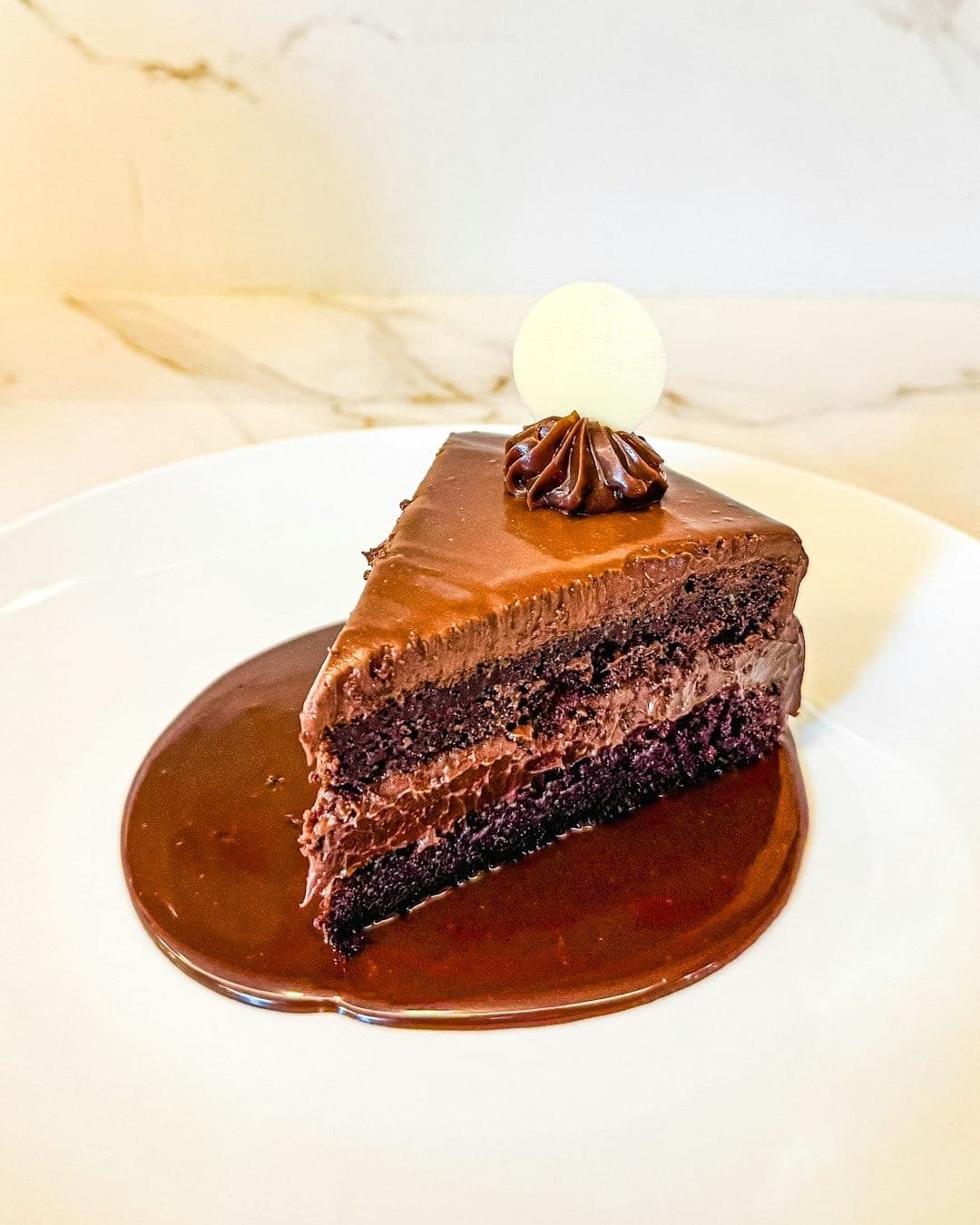
Classic Moist Chocolate Layer Cake
Overview
- Prep Time: 20 minutes
- Cook Time: 30 to 35 minutes
- Servings: 12 slices
- Difficulty: Easy
Ingredients
For the Chocolate Cake
- 2 cups granulated white sugar
- 1 and 3/4 cups all-purpose flour
- 3/4 cup unsweetened natural cocoa powder
- 2 teaspoons baking soda
- 1 teaspoon baking powder
- 1 teaspoon kosher salt
- 2 large eggs, at room temperature
- 1 cup whole buttermilk, at room temperature
- 1/2 cup vegetable oil (or melted coconut oil)
- 2 teaspoons pure vanilla extract
- 1 cup hot brewed coffee (or boiling water)
For the Chocolate Buttercream Frosting
- 1 cup (2 sticks) unsalted butter, softened to room temperature
- 3 and 1/2 cups powdered sugar (confectioners’ sugar)
- 1/2 cup unsweetened cocoa powder
- 1/3 cup heavy whipping cream (or whole milk)
- 2 teaspoons pure vanilla extract
- 1/4 teaspoon fine sea salt
Instructions
- Prep the oven and pans. Preheat your oven to 350°F (175°C). Grease two 8-inch or 9-inch round cake pans with butter or cooking spray, line the bottoms with parchment paper circles, and lightly dust the sides with cocoa powder.
- Whisk the dry ingredients. In a large mixing bowl, whisk together the sugar, flour, cocoa powder, baking soda, baking powder, and salt until no lumps remain.
- Add the wet ingredients. Add the eggs, buttermilk, vegetable oil, and vanilla extract to the dry mixture. Beat with an electric mixer on medium speed (or whisk vigorously by hand) for 2 minutes until smooth and well combined.
- Stir in the hot coffee. Pour the hot coffee into the batter and mix gently on low speed just until incorporated. The batter will be very thin and liquid—this is normal and creates a super moist texture.
- Bake the layers. Divide the batter evenly between the two prepared cake pans. Bake for 30 to 35 minutes, or until a toothpick inserted into the center comes out clean or with a few moist crumbs.
- Cool completely. Let the cakes cool in the pans for 10 minutes, then run a knife around the edges and invert them onto a wire rack to cool completely before frosting.
- Make the buttercream. Beat the softened butter in a large bowl for 2 minutes until creamy. Add the powdered sugar, cocoa powder, heavy cream, vanilla extract, and salt. Mix on low speed until combined, then beat on medium-high for 2 minutes until light and fluffy.
- Assemble and frost. Place one cooled cake layer on a serving plate and spread a generous layer of frosting on top. Set the second cake layer over it and frost the top and sides smoothly.
Cultural History
The Sweet Evolution of Chocolate Cake: From Ancient Elixirs to Global Comfort Classic
Few desserts command universal affection quite like a slice of rich, tender chocolate cake. Whether served as a towering birthday centerpiece slathered in fudge frosting, baked into a simple single-layer snacking cake, or enjoyed alongside a midday cup of coffee, chocolate cake feels like the ultimate symbol of celebration and comfort. Yet for most of human history, the idea of eating chocolate—let alone baking it into a light, fluffy cake—did not exist. The journey of chocolate cake spans over three millennia, moving from sacred Mesoamerican rituals to European royal courts, Industrial Revolution laboratories, and finally into everyday home kitchens around the world.
Ancient Mesoamerica: Chocolate as a Sacred Drink
Long before sugar, flour, and baking soda entered the picture, chocolate began its story in the tropical rainforests of Mesoamerica. Archaeological evidence shows that as early as 1900 BCE, ancient civilizations—including the Olmecs, Maya, and later the Aztecs—cultivated the cacao tree (Theobroma cacao, literally translating to “food of the gods”).
To these early cultures, cacao was never a sweet confection. Instead, roasted cacao beans were ground into a paste and whisked with water, chili peppers, cornmeal, vanilla, and aromatic flowers to create a frothy, bitter, energizing beverage. In Maya and Aztec societies, cacao held immense spiritual and economic value. Beans were used as currency, offered to deities during religious ceremonies, and consumed by warriors, priests, and nobility at weddings and royal banquets. Because Mesoamerica lacked refined sugar and dairy, chocolate remained strictly a liquid—earthy, spiced, and deeply revered—for thousands of years.
Crossing the Atlantic: Chocolate Arrives in Europe
When Spanish conquistadors arrived in the Americas in the 16th century, they encountered cacao at the court of Aztec emperor Moctezuma II. Initially put off by its intense bitterness, Spanish friars and colonists soon began experimenting with the drink by adding cane sugar, cinnamon, and nutmeg while removing the chili peppers.
By the early 1600s, sweetened hot chocolate had swept through Spain and quickly spread to the royal courts of France, Italy, and England. Throughout the 17th and 18th centuries, chocolate houses opened across London and Paris as fashionable gathering places for aristocrats, writers, and politicians. Even then, chocolate was still consumed almost exclusively as a luxury beverage. Early European bakers occasionally used grated chocolate as a flavoring spice in pastries or custards, but true chocolate cake remained impossible because cocoa was still fatty, coarse, and difficult to blend smoothly into cake batter.
The 19th-Century Breakthroughs That Made Cake Possible
The transformation of chocolate from a thick drink into a baked dessert required three major technological breakthroughs during the 1800s:
- The Cocoa Press (1828): Dutch chemist Coenraad Johannes van Houten invented a hydraulic press capable of squeezing nearly half of the natural fat (cocoa butter) out of roasted cacao beans. What remained was a dry cake that could be pulverized into fine, easily dissolvable cocoa powder.
- Dutch-Processing: Van Houten also discovered that treating cocoa powder with alkaline salts neutralized its natural acidity, darkening its color and creating a smoother, milder flavor. Together, the press and Dutch-processing made cocoa affordable, shelf-stable, and ideal for mixing evenly with flour and liquids.
- Chemical Leaveners (Mid-1800s): Around the same time, the invention of baking soda and commercial baking powder revolutionized home baking. Previously, cakes relied on hours of hand-whipping egg whites or unpredictable yeast to rise. Chemical leaveners allowed bakers to create tender, airy crumbs quickly and reliably.
In 1847, British chocolate maker J.S. Fry & Sons combined cocoa powder, sugar, and melted cocoa butter to produce the world’s first solid eating chocolate bar. Within decades, bakers on both sides of the Atlantic began folding cocoa powder and melted chocolate directly into cake batters.
The First Chocolate Cake Recipes
Interestingly, the earliest American recipes labeled “chocolate cake” in the mid-19th century were not actually chocolate-flavored sponges. Instead, they were yellow or white cakes layered with a dark chocolate filling or glaze—such as the famous Boston Cream Pie, created in 1856 at Boston’s Parker House Hotel, which topped sponge cake and pastry cream with a glossy chocolate icing.
The first true recipe incorporating chocolate directly into the cake batter appeared in Eliza Leslie’s 1847 cookbook, The Lady’s Receipt-Book, which called for finely grated chocolate mixed into the batter. By 1886, American cooks began adding melted chocolate directly to cake dough, producing the rich, dark crumb we recognize today.
The Rise of Devil’s Food and Depression-Era Ingenuity
By the turn of the 20th century, chocolate cake had become a fixture in American baking, giving rise to iconic regional variations. The most famous was Devil’s Food Cake, developed around 1900. Named as a rich, dark contrast to snowy white Angel Food Cake, Devil’s Food relied on extra cocoa powder, brown sugar, and baking soda—which reacted with the cocoa to give the cake a deep mahogany color and plush texture.
In the 1920s, bakers discovered that adding hot coffee or boiling water to cocoa powder “bloomed” the cocoa solids, unlocking deeper roasted chocolate notes while creating an extraordinarily moist crumb. Meanwhile, during the Great Depression and World War II rationing—when butter, milk, and eggs were scarce—home bakers invented “Wacky Cake” (also known as Depression Cake). Using vegetable oil, vinegar, baking soda, and cocoa powder, this egg-free, dairy-free cake proved that an indulgent chocolate dessert could be made from basic pantry staples.
Post-War Convenience and Global Traditions
Following World War II, boxed cake mixes introduced by companies like General Mills and Duncan Hines brought chocolate cake into virtually every household, turning scratch baking into a 30-minute convenience. At the same time, iconic regional styles flourished across the globe:
- Austria’s Sachertorte (1832): A dense chocolate sponge layered with tangy apricot jam and coated in dark chocolate glaze, invented in Vienna by Franz Sacher.
- Germany’s Black Forest Gateau (Schwarzwälder Kirschtorte): Layers of chocolate sponge soaked in cherry brandy (Kirsch), whipped cream, and tart cherries.
- France’s Flourless Chocolate Cake & Molten Lava Cake: Celebrating pure, intense chocolate texture with minimal flour.
- American Texas Sheet Cake & German Chocolate Cake: Beloved community and family classics featuring poured fudge frosting or sweet coconut-pecan topping.
Why Chocolate Cake Endures Today
Today, chocolate cake bridges cultures and generations. While its ingredients have evolved from wild Mesoamerican cacao pods to supermarket cocoa tins, its purpose remains surprisingly similar to its ancient roots: bringing people together to mark milestones, offer comfort, and share something extraordinary. Whether baked with buttermilk and hot coffee for a towering celebration layer cake or whisked together in a single bowl on a weeknight, every slice carries centuries of culinary curiosity and tradition
-
Classic Moist Chocolate Layer Cake
Classic Moist Chocolate Layer Cake Classic Moist Chocolate Layer Cake Overview Ingredients For the Chocolate…
-
Classic Creamy Alfredo Sauce
Classic Creamy Alfredo Sauce Overview Ingredients Instructions Cultural History The Story Behind Alfredo Sauce: From…
-
Classic Beef Chili Con Carne
Classic Beef Chili Con Carne Overview Ingredients Instructions Cultural History The Origins and Evolution of…

Leave a Reply