
Classic Spaghetti Carbonara
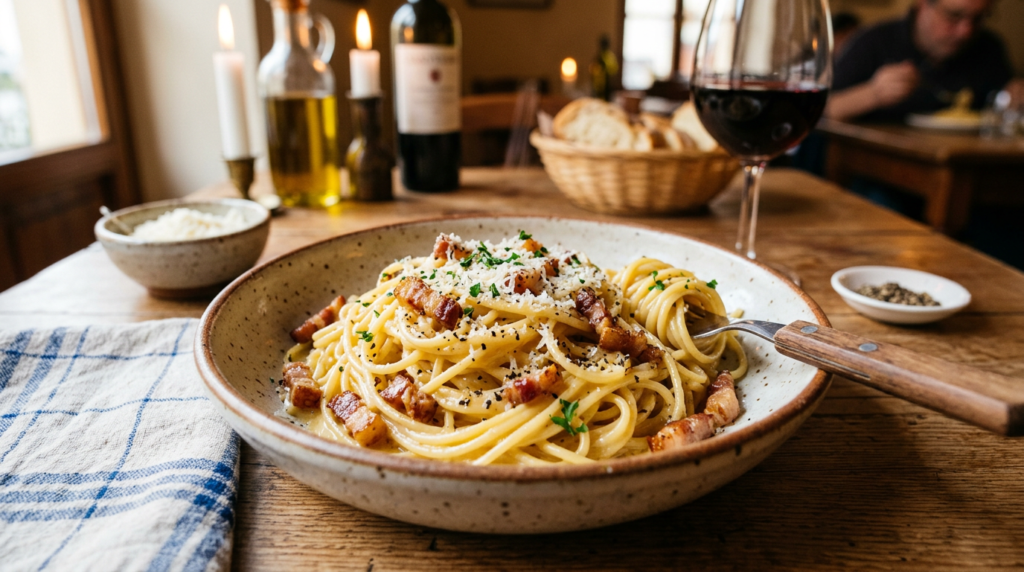
Overview
- Prep Time: 10 minutes
- Cook Time: 15 minutes
- Total Time: 25 minutes
- Servings: 4 servings
- Difficulty: Easy
Ingredients
- 1 lb (450 g) spaghetti
- 6 oz (170 g) guanciale or pancetta, diced into 1/4-inch cubes
- 4 large egg yolks, plus 1 whole large egg (at room temperature)
- 1 cup (100 g) Pecorino Romano cheese, finely grated (plus extra for serving)
- 1 tsp freshly cracked black pepper (plus more to taste)
- 1 tbsp kosher salt (for the pasta water)
Instructions
- Boil the pasta: Bring a large pot of water to a boil, add the kosher salt, and cook the spaghetti until al dente according to package directions. Before draining, reserve 1 ½ cups of the starchy cooking water.
- Render the pork: While the pasta boils, place the guanciale or pancetta in a large, cold skillet over medium heat. Cook for 6–8 minutes, stirring occasionally, until the fat renders out and the pieces turn golden and crisp. Remove the skillet from the heat.
- Make the egg mixture: In a medium bowl, whisk together the egg yolks, whole egg, finely grated Pecorino Romano, and freshly cracked black pepper until a thick paste forms.
- Temper the sauce: Slowly whisk 1/4 cup of the hot reserved pasta water into the egg and cheese mixture to gently warm it up without scrambling.
- Combine off the heat: Transfer the drained, hot spaghetti directly into the skillet with the crispy pork and its rendered fat. Toss well to coat the noodles.
- Emulsify: Ensure the skillet is completely off the burner. Pour the tempered egg mixture over the pasta while tossing vigorously with tongs for 1–2 minutes until a glossy, creamy sauce clings to every strand. Add more reserved pasta water, a tablespoon at a time, if the sauce seems too thick.
- Serve: Plate immediately and top with extra Pecorino Romano and cracked black pepper.
Cultural History
Spaghetti alla carbonara is a mid-20th-century culinary icon rooted in Roman tradition, yet shaped by wartime improvisation, rural peasant cooking, and transatlantic exchange. While modern purists guard its five-ingredient formula—spaghetti, guanciale, egg yolks, Pecorino Romano, and black pepper—the cultural history of carbonara reveals a surprisingly young and fiercely debated dish. [1, 2, 3, 4]
The Myth of Ancient Roman Roots
To many diners around the world, carbonara feels like an eternal pillar of Italian gastronomy, standing shoulder to shoulder with cacio e pepe, amatriciana, and gricia as one of Rome’s four foundational pastas. Yet historical records show that carbonara is a modern creation. Notably, the dish is completely absent from Ada Boni’s landmark 1930 cookbook, La Cucina Romana, which meticulously cataloged traditional Roman cooking. It is equally missing from the 1950 inaugural edition of Il Cucchiaio d’Argento (The Silver Spoon), Italy’s postwar culinary bible. [1, 2, 3]
The earliest known written reference to the dish’s name only recently came to light in a 1939 Dutch East Indies newspaper, De Koerier, which briefly mentioned a trattoria in Rome’s Trastevere neighborhood famous for “spaghetti alla carbonara” without describing what was in it. The first Italian print mention didn’t appear until 1950, when the Turin newspaper La Stampa reported that Allied officers had been eagerly seeking out the dish in Roman restaurants after the war. [1, 2]
Three Competing Origin Stories
Because no single birth certificate exists for carbonara, food historians and Italian locals generally point to three primary theories—each reflecting a different facet of Italian cultural identity. [1, 2]
1. The Apennine Charcoal Burners (Carbonai)
The most romanticized Italian origin story ties the dish to the carbonai—woodcutters and charcoal burners who worked for months at a time in the Apennine mountains of Lazio and Abruzzo. According to this theory, workers needed a calorie-dense meal made from shelf-stable ingredients they could easily carry into the forests: cured pork cheek (guanciale), aged sheep’s cheese (Pecorino), dried pasta, eggs, and black pepper. In this narrative, the generous dusting of coarse black pepper over the pasta visually echoed the coal dust (carbone) that settled on the workers’ clothes and food. While charming, historians note there is no pre-20th-century documentation linking charcoal workers to this specific recipe. [1, 2, 3, 4, 5, 6]
2. The Neapolitan Cacio e Uova Lineage
A second, more culinary-focused theory traces carbonara’s technique to southern Italy, specifically Naples. In 1837 and 1839, Neapolitan nobleman and gastronome Ippolito Cavalcanti published recipes for pasta dressed with melted lard, beaten eggs, grated cheese, and black pepper—a dish known as pasta cacio e uova (cheese and eggs). In Umbria, a 1931 Italian Touring Club guide also described a rural pasta dish made with whipped eggs, pork fat, and sausage. Under this view, carbonara was not invented out of thin air; rather, Roman cooks adapted a longstanding central-and-southern Italian peasant technique—using eggs and cheese to bind hot pasta—and elevated it with cured pork. [1, 2, 3]
3. The 1944 Allied Liberation Theory
The theory most widely supported by modern food historians—including Italian scholar Luca Cesari—places carbonara’s birth directly in the aftermath of World War II. When Allied troops liberated Rome in June 1944, Italy was suffering from severe food shortages. American soldiers arrived carrying abundant military rations rich in staples familiar to the American breakfast table: cured bacon, powdered eggs, processed cheese, and cream. [1, 2, 3, 4]
According to this account, Roman trattoria cooks combined American GI bacon and egg rations with local Italian pasta to satisfy homesick Allied soldiers craving flavors reminiscent of bacon and eggs. A Bolognese chef named Renato Gualandi even claimed in later memoirs that he invented the dish in 1944 while cooking a celebratory dinner for British and American generals in Riccione using Allied ration bacon, cream, processed cheese, and egg yolk powder. While Gualandi’s specific claim remains debated, the broader wartime context aligns closely with the historical paper trail. [1, 2, 3, 4, 5]
The Transatlantic Paper Trail and Culinary Evolution
Interestingly, the very first published recipe for carbonara did not appear in Italy at all—it was printed in the United States. In 1952, an illustrated guide to Chicago’s dining scene titled Viddles and Vice by Patricia Bronté included a recipe for “Pasta Carbonara” attributed to Armando’s, a local Italian-American restaurant. Likely brought back to the Midwest by returning American servicemen, Bronté’s version called for tagliarini noodles, mezzina (pancetta), eggs, and Parmesan cheese. [1, 2, 3]
Two years later, in August 1954, the prestigious Italian culinary magazine La Cucina Italiana published Italy’s first written recipe. By today’s strict Roman standards, that 1954 recipe would spark outrage: it called for pancetta, garlic, eggs, and Swiss Gruyère cheese. Throughout the 1960s, 1970s, and 1980s, even celebrated Italian chefs routinely added heavy cream, white wine, onions, or parsley to stabilize the egg sauce and prevent scrambling. [1, 2, 3, 4, 5]
Modern Canonization and “Gastro-Nationalism”
It wasn’t until the 1990s that Italian chefs and food writers began stripping away cream, garlic, and pancetta to establish the strict “canonical” recipe recognized today. By replacing pancetta with guanciale (cured pork jowl) and swapping Parmesan or Gruyère for pungent Pecorino Romano, Rome claimed carbonara as an emblem of hyper-local culinary heritage. [1, 2, 3, 4]
Today, carbonara sits at the center of passionate cultural debates—sometimes referred to by sociologists as “gastro-nationalism”. Every April 6, Italy celebrates Carbonara Day, an international event dedicated to defending the dish’s traditional preparation. When foreign publications or chefs introduce twists—such as adding peas, heavy cream, or cooking it in a single pot—social media erupts with fierce commentary from defenders of Roman tradition. [1, 2]
Ultimately, spaghetti alla carbonara’s enduring cultural power lies in that very tension. Whether born in the smoky camps of Apennine charcoal burners or forged in the chaotic, resource-strapped kitchens of postwar Rome, carbonara is a testament to culinary alchemy—transforming five humble, rustic ingredients into one of the world’s most beloved dishes. [1, 2, 3]
Would you like to condense or adapt this piece for a specific format (such as a blog post, school essay, or newsletter), or dive deeper into one of the historical theories?
-
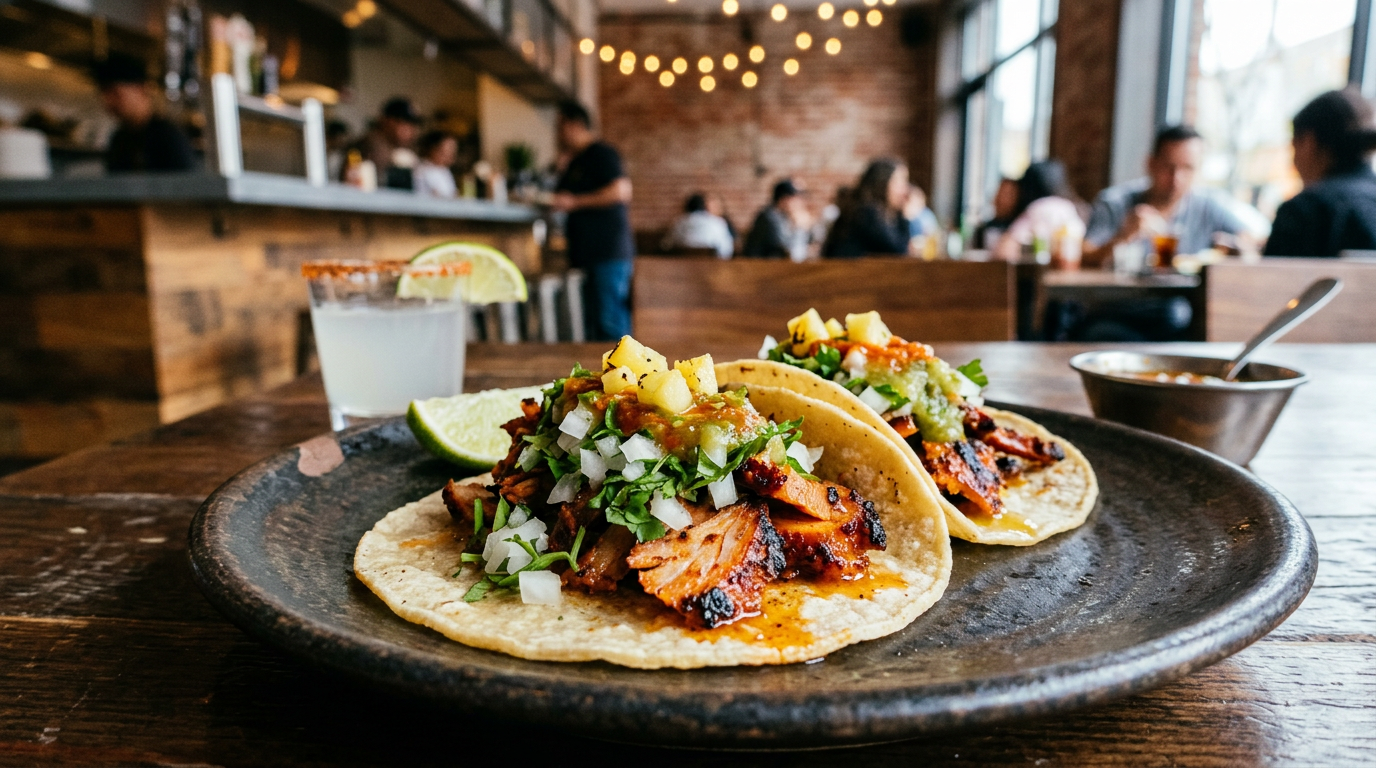
Tacos al Pastor
Tacos al Pastor Authentic Tacos al Pastor Recipe Tacos al pastor are a legendary staple…
-
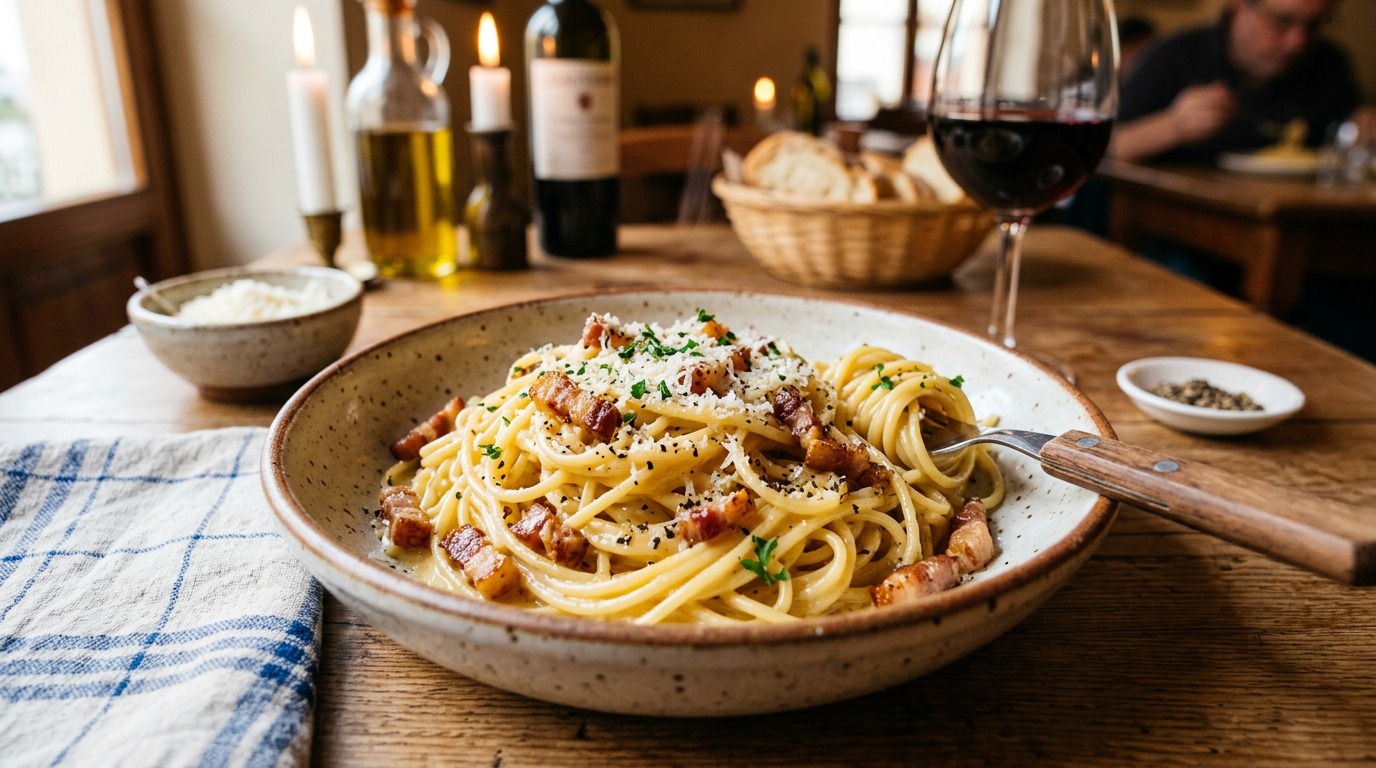
Classic Spaghetti Carbonara: Authentic Roman Recipe
Classic Spaghetti Carbonara Overview Ingredients Instructions Cultural History Spaghetti alla carbonara is a mid-20th-century culinary…
-
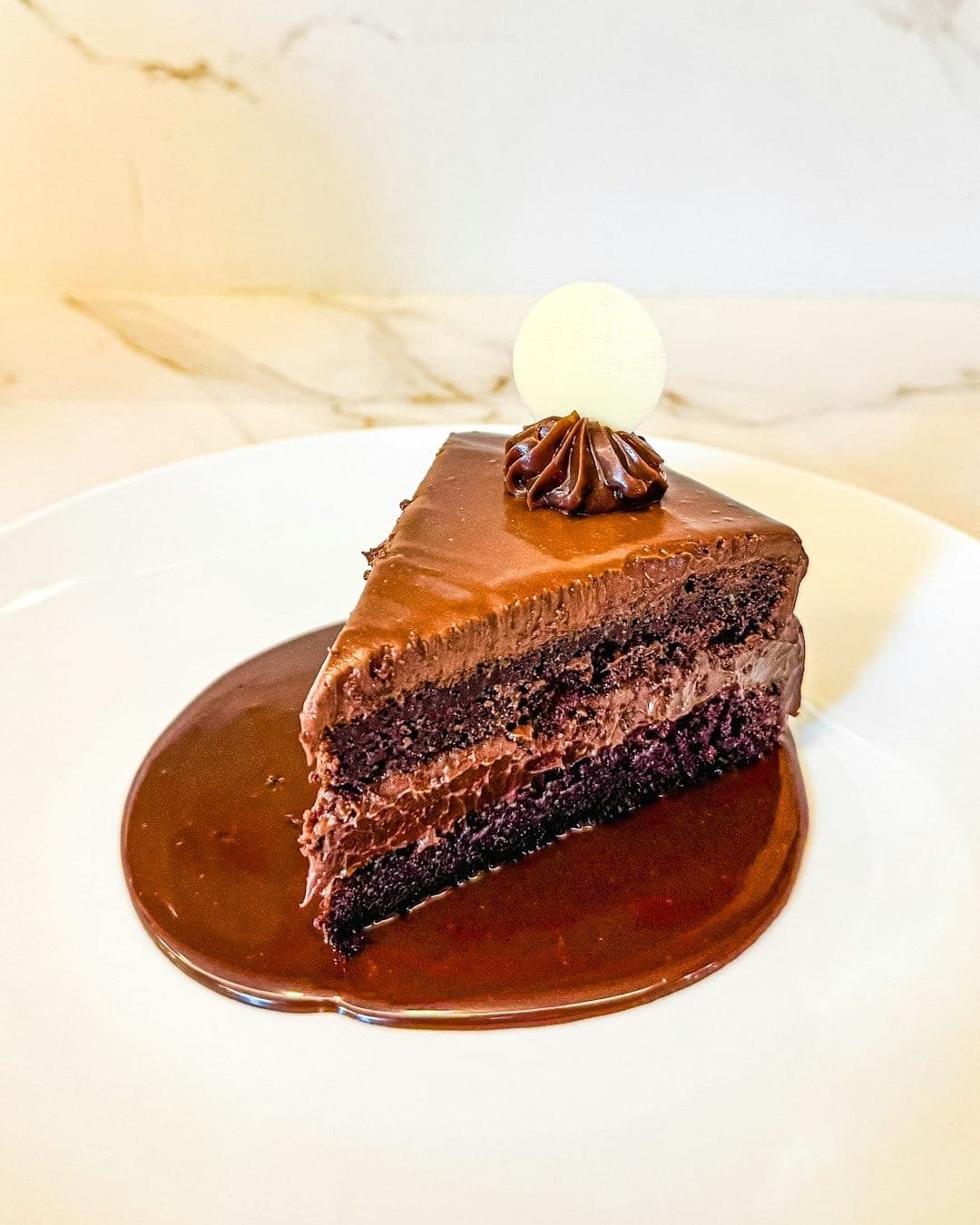
Classic Moist Chocolate Layer Cake
Classic Moist Chocolate Layer Cake Classic Moist Chocolate Layer Cake Overview Ingredients For the Chocolate…

Leave a Reply