
Tacos al Pastor
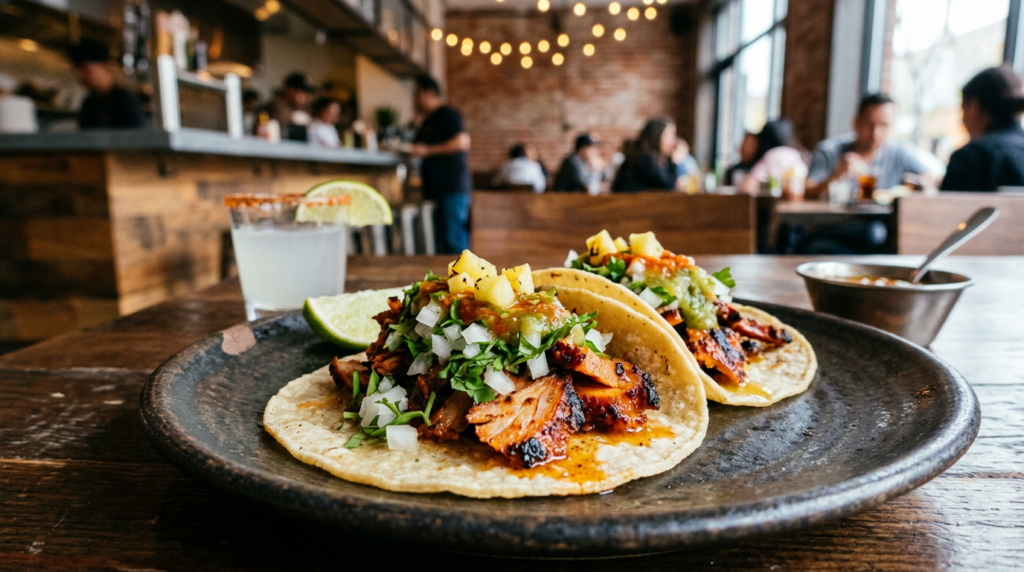
Tacos al pastor are a legendary staple of Mexican street food, famous for their vibrant color, smoky char, and perfect balance of savory and sweet flavors.
- 2 lbs boneless pork shoulder, thinly sliced
- 3 dried guajillo chiles, stemmed and seeded
- 2 dried ancho chiles, stemmed and seeded
- 1/4 cup achiote paste
- 1/2 cup white vinegar
- 1/2 cup pineapple juice
- 3 cloves garlic
- 1 small white onion, roughly chopped
- 1 tbsp dried oregano
- 1 tsp ground cumin
- 1 tsp ground cloves
- Salt and black pepper to taste
- Small corn tortillas
- 1 cup fresh pineapple, finely diced
- 1/2 cup fresh cilantro, chopped
- 1/2 white onion, finely diced
- Lime wedges for serving
- Rehydrate the dried chiles in boiling water for 15 minutes, then drain.
- In a blender, combine the rehydrated chiles, achiote paste, vinegar, pineapple juice, garlic, onion, oregano, cumin, cloves, salt, and pepper. Blend until completely smooth.
- Place the pork slices in a large bowl, pour the marinade over the meat, ensuring every piece is well coated. Cover and refrigerate for at least 4 hours, preferably overnight.
- Heat a large skillet or cast-iron griddle over medium-high heat with a little oil. Cook the marinated pork slices in batches until charred on the edges and cooked through, about 4-5 minutes per side. Alternatively, thread the slices tightly onto skewers to mimic a vertical spit, roast, and shave off the meat.
- Chop the cooked pork into smaller, bite-sized pieces.
- Warm the corn tortillas on a dry skillet. Top each tortilla with the pork, diced pineapple, chopped onions, and fresh cilantro.
- Serve immediately with fresh lime wedges on the side.
The Cultural History of Tacos Al Pastor
The story of tacos al pastor is a fascinating tale of culinary migration, cultural fusion, and the remarkable adaptability of food traditions. To understand how the iconic taco al pastor came to be, one must look back nearly a century to the Middle East, specifically to the influx of Lebanese immigrants who arrived in Mexico during the late 19th and early 20th centuries.
In the 1930s, thousands of Lebanese Christians migrated to Mexico, settling primarily in Puebla, a city known for its rich culinary heritage. Among the cultural traditions these immigrants brought with them was shawarma—spiced lamb or mutton roasted on a vertical spit, sliced thin, and served wrapped in flatbread. As these immigrants integrated into Mexican society, they opened restaurants and introduced local populations to their savory, rotating meat skewers.
However, Mexican diners and restaurateurs began to adapt the recipe to suit local palates and available ingredients. Lamb was gradually replaced by pork, an animal deeply rooted in Mexican agriculture and cuisine since the Spanish conquest. The traditional Middle Eastern spices were swapped out for native Mexican ingredients, giving birth to a brand-new flavor profile. The marinade was revolutionized by the incorporation of achiote paste—a bright red paste made from annatto seeds native to Central America—alongside local dried chiles like guajillo and ancho, garlic, vinegar, and sweet pineapple.
The name “al pastor” translates literally to “in the style of the shepherd,” a nod to the original lamb-based shawarma of the Middle Eastern shepherds. Yet, the dish itself became quintessentially Mexican. The cooking technique remained the same: meat stacked in a large, cone-like shape on a vertical metal spit (known in Mexico as a trompo, meaning “spinning top”) and slowly roasted next to an open flame. As the outer layers of the pork crisp up, the taquero expertly shaves the meat directly into a waiting warm corn tortilla.
The addition of fresh pineapple to the top of the trompo was another stroke of culinary genius. As the vertical spit rotates, the juices from the roasting pineapple trickle down through the layers of spiced pork, tenderizing the meat and adding a bright, acidic sweetness that cuts through the rich, fatty pork. Once plated, the taco is traditionally garnished with simple yet impactful ingredients: finely diced white onion, freshly chopped cilantro, a squeeze of fresh lime juice, and often a spoonful of vibrant red or green salsa.
By the 1960s, tacos al pastor had migrated from Puebla to Mexico City, where street vendors embraced the dish and transformed it into a cornerstone of urban nightlife. Mexico City’s bustling streets became lined with taquerias featuring glowing trompos, drawing crowds of hungry patrons seeking a quick, delicious, and affordable meal after a night out or during a busy workday.
Today, tacos al pastor are celebrated not just as street food, but as a cultural symbol of globalization and mestizo identity. They represent the harmonious blending of Arab and Mexican culinary traditions, proving that food has no borders. Whether eaten off a paper plate at a bustling Mexico City street corner or served in a high-end restaurant, the taco al pastor remains a testament to the creativity, resilience, and evolving nature of Mexican gastronomy.
-
Tacos al Pastor
Tacos al Pastor Authentic Tacos al Pastor Recipe Tacos al pastor are a legendary staple…
-
Classic Spaghetti Carbonara: Authentic Roman Recipe
Classic Spaghetti Carbonara Overview Ingredients Instructions Cultural History Spaghetti alla carbonara is a mid-20th-century culinary…
-

Classic Moist Chocolate Layer Cake
Classic Moist Chocolate Layer Cake Classic Moist Chocolate Layer Cake Overview Ingredients For the Chocolate…

Leave a Reply