
Recipes
Authentic: Nigerian Party Rice
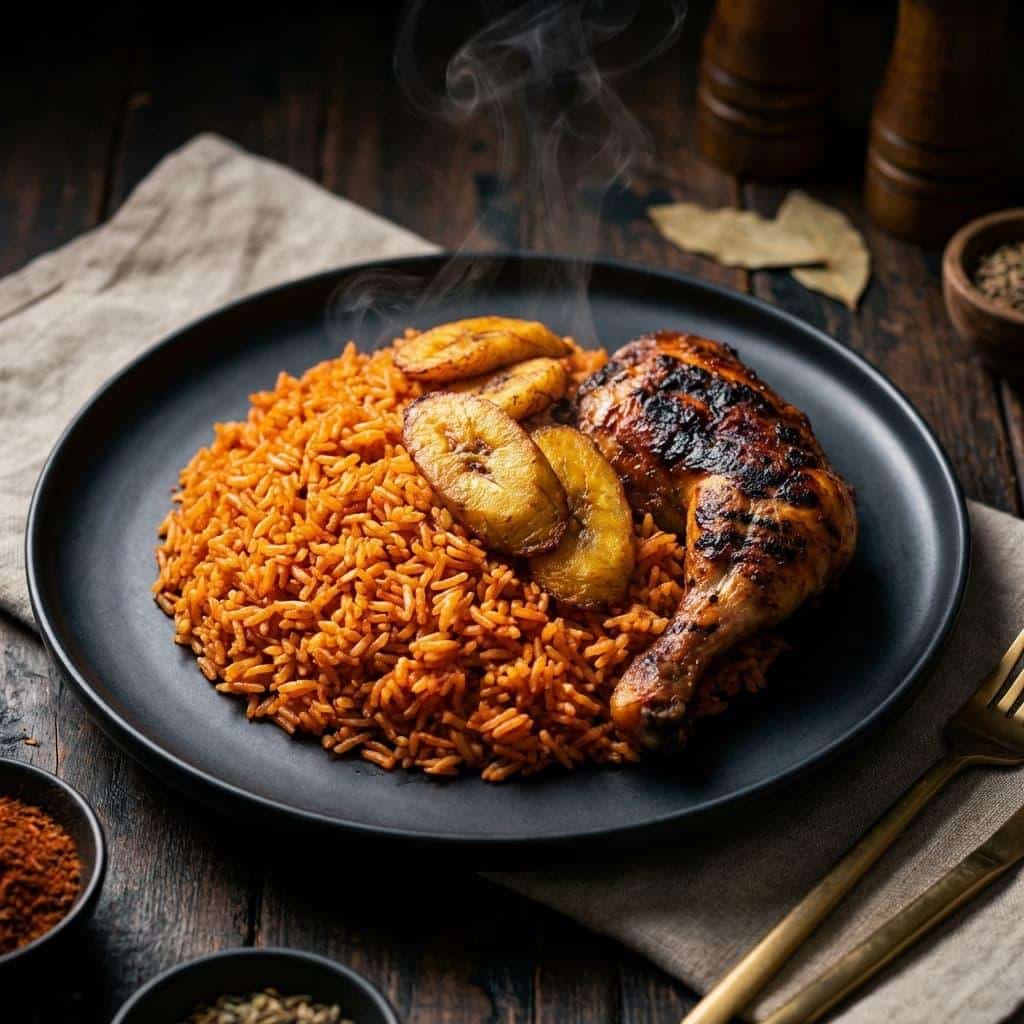
Overview
Ingredients
- 4 cups long-grain parboiled rice
- 6 large ripe plum tomatoes (or one 14-oz tin of plum tomatoes)
- 4 red bell peppers (tatashe), seeds removed
- 2 to 3 scotch bonnet peppers (ata rodo), stems removed (adjust to heat preference)
- 2 medium red onions (1 roughly chopped for blending, 1 thinly sliced for frying)
- 1/3 cup vegetable oil
- 3 tablespoons tomato paste
- 3 cups rich chicken or beef stock
- 3 seasoning cubes (such as Maggi or Knorr)
- 2 bay leaves
- 1 teaspoon curry powder
- 1 teaspoon dried thyme
- 1 teaspoon salt (or to taste)
- 2 tablespoons butter (optional, for finishing) [1, 2, 3, 4, 5]
Instructions
- Make the pepper base. Blend the tomatoes, red bell peppers, scotch bonnet peppers, and 1 chopped onion until completely smooth. Pour the blend into a pot and boil uncovered over medium heat for 10 to 15 minutes until the excess water evaporates and the mixture thickens. [1, 2]
- Wash the rice. Rinse the parboiled rice in cold water several times, rubbing the grains gently until the water runs clear. Drain well in a colander. [1, 2]
- Fry the aromatics. Heat the vegetable oil in a large, heavy-bottomed pot over medium heat. Add the sliced onion and sauté for 2 to 3 minutes until soft and fragrant. [1, 2]
- Fry the tomato paste. Stir in the tomato paste and fry for 3 to 5 minutes, stirring constantly so it does not burn, until it darkens to a deep brick red. [1, 2]
- Cook the stew base. Pour in the thickened pepper blend along with the curry powder, thyme, bay leaves, seasoning cubes, and salt. Fry on medium heat for 15 to 20 minutes, stirring occasionally, until the sauce reduces and a shiny layer of red oil floats to the top. [1, 2]
- Combine rice and stock. Pour in the chicken or beef stock and bring to a boil. Taste the liquid and adjust the salt—it should taste slightly bolder than you normally prefer because the rice will absorb the seasoning. Stir in the washed rice until every grain is coated; the liquid should sit just level with the top of the rice. [1, 2, 3]
- Steam the rice. Cover the pot tightly with a sheet of aluminum foil, then place the lid firmly on top to trap the steam. Reduce the heat to the lowest setting and cook undisturbed for 30 minutes. [1]
- Create the smoky finish. Check the rice; if the grains are tender and the liquid is absorbed, turn the heat up to medium for 3 to 5 minutes without stirring. Listen for a gentle crackle as the bottom layer toasts and releases a smoky aroma, then immediately turn off the heat before it burns. [1, 2]
- Rest and serve. Let the pot rest covered for 5 to 10 minutes. Remove the bay leaves, stir in the butter for a glossy finish, and gently fluff the rice with a fork before serving
Cultural History
The Origins and Evolution of Nigerian Jollof Rice
Jollof rice is more than just a dish in West Africa; it is a cultural touchstone, a symbol of national pride, and the undisputed centerpiece of any proper Nigerian celebration. Often referred to simply as “party jollof,” this smoky, rich, reddish-brown rice dish holds a sacred place in the hearts and stomachs of Nigerians. To understand party jollof is to understand a slice of West African history, trade, migration, and the deep-seated cultural philosophy of community and hospitality.
To trace the roots of Nigerian jollof, one must look back centuries to the Jolof Empire, which flourished from the 14th to the 16th centuries across parts of modern-day Senegal, The Gambia, and Mauritania. The Wolof people of this region are credited with inventing a rice-based dish known as ceebu jën, which translates to “rice with fish.” Traditionally, this dish was made by cooking broken rice in a rich fish and vegetable broth, absorbing the flavors into the grains.
As the Jolof Empire expanded and trade routes grew across West Africa through the trans-Saharan trade and coastal maritime routes, the recipe migrated. Merchants, travelers, and religious scholars carried the culinary concept across the region. As the dish moved eastward toward the Gulf of Guinea—passing through what is now Ghana, Togo, Benin, and finally Nigeria—it underwent a profound transformation. Because access to fresh fish and the specific ingredients of the Senegambian coast varied, local populations adapted the recipe to fit their indigenous agricultural outputs and flavor profiles. In Nigeria, particularly within the Yoruba and Igbo culinary traditions, the fish was largely replaced by meat stock, and the cooking method evolved to rely heavily on a rich, slow-simmered tomato and pepper base.
What distinguishes Nigerian jollof from its West African cousins—most notably the famous Ghanaian jollof and Senegalese ceebu jën—is the distinct cooking technique and the resulting flavor profile. While Ghanaian jollof often uses basmati rice and a different tomato stew consistency, and Senegalese jollof retains its coastal, fish-heavy roots, Nigerian jollof is defined by its use of long-grain parboiled rice, a heavy tomato-onion-pepper blend, and, most importantly, the coveted “party smoke.”
The term “party jollof” is not merely descriptive; it is a category of its own. Anyone who has attended a Nigerian owambe—a traditional, lavish party characterized by vibrant attire, live music, and dancing—knows that the jollof rice served there tastes fundamentally different, and vastly superior, to anything cooked on a standard domestic stovetop.
The secret to party jollof lies in the equipment and the environment. Traditionally, party jollof is cooked outdoors in massive, heavy-bottomed cast-iron pots over open wood fires. The wood fire imparts a distinct, rustic smokiness that is chemically and sensorially distinct from gas or electric cooking. Furthermore, the sheer volume of the food changes the thermodynamics of the cooking process. As the bottom layer of the rice begins to caramelize and scorch slightly against the cast iron, it creates a smoky, toasted crust known in Nigeria as “bottom pot” or socook. In Yoruba, this burnt bottom is sometimes affectionately called asaro or simply the burnt part that everyone fights over. This controlled burning is not a mistake; it is a deliberate culinary achievement that infuses the entire pot with an unmistakable aroma.
The preparation of Nigerian party jollof is a labor of love and a precise science. The base begins with a generous amount of oil, usually bleached palm oil or vegetable oil, used to fry onions. To this, a heavily blended mixture of fresh plum tomatoes, red bell peppers (known locally as tatashe), and scotch bonnet peppers (rodo) is added. This paste must be fried, sometimes for hours, until the sourness of the raw tomatoes cooks out and the oil separates to the top—a process Nigerians call “frying the stew.”
Next comes the seasoning: curry powder, thyme, bay leaves, white or black pepper, and bouillon cubes, which are an absolute non-negotiable staple in West African kitchens. Rich meat stock, often from beef, goat, or chicken, is added to the fried tomato base before the washed parboiled rice goes in. The heat is carefully managed, and the pot is tightly sealed, usually with foil or banana leaves, to trap the steam and ensure every grain of rice cooks evenly without becoming mushy. The result is a vibrant, ruby-red grain that is firm to the bite, deeply savory, and unmistakably smoky.
Beyond its culinary components, jollof rice occupies a unique space in Nigerian social sociology. Food in Nigeria is a language of love, status, and community. In Yoruba culture, particularly during major life events such as weddings, naming ceremonies, and funerals, the quality of the food served can make or break the social standing of the host family. Guests expect a well-seasoned plate featuring jollof rice flanked by fried plantains (dodo), Moin Moin (steamed bean pudding), and a choice of beef, chicken, or fried turkey.
The serving of party jollof is also tied to the concept of owanbe culture. These celebrations are grand, open-door affairs where distant relatives, uninvited neighbors, and friends of friends gather. The jollof rice is usually served in colorful, disposable plastic takeaway packs—affectionately dubbed “takeaway” or “pack”—at the end of the event. It is a social ritual for guests to eagerly anticipate these packs, and comparing the jollof from different parties is a national pastime. A party with bad jollof is remembered for all the wrong reasons.
In recent years, jollof rice has transcended the borders of Nigeria and the African continent, entering the global culinary consciousness. This global rise has been accompanied by the famous, lighthearted “Jollof Wars,” a friendly yet fiercely contested rivalry primarily between Nigerians and Ghanaians on social media over who makes the best version of the dish. While culinary purists can debate the merits of parboiled versus basmati rice, or tomato paste versus fresh tomatoes until the cows come home, the debate itself has served to elevate West African cuisine on the global stage. International chefs, food television networks, and global food festivals now regularly feature jollof rice, cementing its status as the quintessential African comfort food.
Moreover, jollof rice has become a powerful tool for cultural diplomacy and diaspora identity. For Nigerians living in London, Houston, Toronto, or Beijing, cooking a pot of party jollof is an act of cultural preservation. It is a way to recreate the warmth, noise, and community of a Lagos street party thousands of miles away from home. When second and third-generation Nigerians taste that familiar smoky flavor, they are instantly connected to a heritage that spans centuries and continents.
In conclusion, Nigerian party jollof rice is much more than a combination of rice, tomatoes, and spices. It is a historical artifact born from ancient African empires and shaped by centuries of trade and adaptation. It is a technical masterpiece achieved through open-fire cooking and precise seasoning. Most importantly, it is the heartbeat of Nigerian social life—a dish that brings people together, bridges divides, and turns any gathering into a celebration. As long as there are milestones to be marked and stories to be shared, the great pots of party jollof will continue to simmer over open flames, feeding bodies and souls alike.
-
Classic Moist Chocolate Layer Cake
Classic Moist Chocolate Layer Cake Classic Moist Chocolate Layer Cake Overview Ingredients For the Chocolate…
-
Classic Creamy Alfredo Sauce
Classic Creamy Alfredo Sauce Overview Ingredients Instructions Cultural History The Story Behind Alfredo Sauce: From…
-
Classic Beef Chili Con Carne
Classic Beef Chili Con Carne Overview Ingredients Instructions Cultural History The Origins and Evolution of…

Ultimate West African Jollof Rice Recipe: Step-by-Step Guide
Leave a Reply